Andrea Kirby
Is it time to ditch the CV?

The resume is 70 years old. We're still using it as the primary source for assessing candidates at the first line. That's the problem. And as many of you know, I love a good disruption to HR and TA when it makes sense. So why are we still using it? And what would it take to move it on?
Dina Kirk, Chief Evangelist, Hirevue said, "A resume is a self-portrait. A talent fingerprint is the truth." And she went on to explain why using a talent fingerprint model based on more than what a resume can provide should be the future.
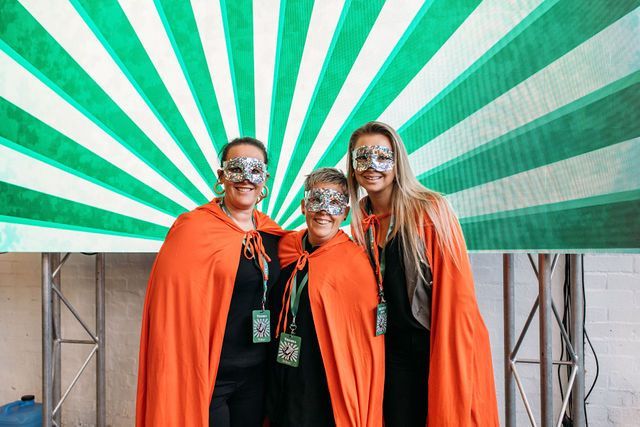
I was invited to the HireVue Horizon event in Melbourne a couple of weeks ago. I sat at lunch with some huge Hirevue fans and some people looking at their TA function, and processes and how to make it work better. The food was great, the conversations even better and the presentation by Dina gave me real food for thought. So I wrote it down.....
The Foundation Is Broken - and AI Is Making It Worse
Most recruitment is still built on two fundamentally flawed documents - the job description and the CV.
Job descriptions are written to filter and advertise and even then they don’t do that well. You sit with the hiring manager, often with a previous version of the JD and it describes qualifications, years of experience rather than what great performance actually looks like in this role. And there is already baked in bias - the language, the requirements, the framing, all of it reflects the person who wrote it and the people who've held the role before. Research consistently shows JD language can be gendered, ableist, or culturally coded in ways that deter strong candidates before they even apply.
Candidates are taking that tired description and are using AI to write resumes. The resumes are based on AI-generated job descriptions. AI doesn't fix the problem; it amplifies it.
- 90% of companies still using the CV as the primary filter
- Only 20–30% validating skills through assessment
Skills-based, science-backed hiring isn't just ethically better, it's commercially smarter. I have heard it argued and even said it myself as the great rise of skills based hiring was happening, ‘Isn’t this what we have always done? Hired for skills?’
And I think we have tried to make the best of a flawed model. Using the CV as a first line of selection means that we actually have no real understanding of what a person's skill set is. Because the CV does not bring that out. It’s curated, retrospective, and optimised for impression management rather than evidence of capability. The "best" candidate becomes whoever most closely mirrors the language of the document, not whoever is most likely to succeed in the role.
The insight that landed hardest on the day came from Dina and we have heard it time and time again, ‘if your inputs are flawed, AI just automates the flaw’. The question for TA leaders isn't whether to use AI in hiring, it's whether you're feeding it something worth amplifying.
We need to know more about what a person is bringing to the table.
The ROI of Getting This Right
AI adoption among HR professionals surged from 58% in 2024 to 72% in 2025. Adoption is accelerating, but are we also looking at what data and information we are using and updating it accordingly. We cannot take old systems and processes and just automate them. HR and TA processes need an overhaul and a rethink.
Assessments have
- People who score low on validated assessments are more likely to have left by the 90-day mark - turnover cost savings are real
- Graduate cohort data: those who scored higher were 2x more likely to be promoted and received higher manager quality ratings
- 92% of job seekers abandon online job applications shortly after clicking "apply" - so efficiency and experience both matter
- Putting assessment at the top of the funnel can drive a 25–30% improvement in downstream funnel conversion
"The future of hiring isn't about collecting more signals. It's about proving which signals matter."
HireVue solution - The Talent Fingerprint
HireVue previewed their vision of a "talent fingerprint" - a validated, portable, outcomes-connected talent profile that replaces the CV as how we assess candidates.
Here's how it works in practice
- Candidate lands on a career site and engages in a dynamic conversation - not a form, not a job board
- Talent Engagement blends science and AI to engage candidates with dynamic, natural conversations that feel like an interaction with a recruiter rather than a scripted bot
- Application time drops from ~15 minutes to ~5 minutes
- AI interviewing is transparent and two-way - screen (5 min), qualify (10 min), or assess language/skills (13 min) - and doesn't advance until it gets what it needs
- The outcome is a talent profile tied to actual role outcomes, not job title keyword matching
The thing that struck me most was the framing around internal job titles. You no longer need them to "sound right" for the outside world, because the matching is done on actual skills and interests.
Two things stood out for me. And I did ask the question about neurodiverse candidates as I am tired of watching my son struggle to apply for jobs.
Neurodiversity inclusion
Skills-based hiring has a real upside for neurodivergent candidates, moving from who someone looks like on paper to what they can actually do because often for people from marginalised groups, their career history is not linear.
HireVue and Aspect (Autism Spectrum Australia) have collaborated to develop
Rethinking Recruitment: A Guide to Support Autistic and Neurodivergent Candidates, a practical guide helping TA teams redesign each stage of the hiring journey to ensure every candidate has the opportunity to showcase their true abilities.
I think that accessibility and inclusion still has some way to go with assessment products. Last year, I did some research on all assessment tools and there was a distinct lack of accommodations for neurodiversity. And even less for people with other disabilities. If we can make the career websites inclusive as well, we might actually be getting somewhere to solving this.
Fraud and transparency Biometric data is being used for identity verification, but critically, it's framed as supporting human decisions, not replacing them. Candidates are told upfront when they're speaking to an AI interviewer. Candidate feedback is collected and used to improve the process. That transparency matters.
We have seen too many social media posts about people not understanding why they are being interviewed by tech and how it works. How this is framed to the candidate is one of the most important aspects to plan and execute.
So what’s the hard part?
The technology is the easy bit.
Skills-based hiring, talent fingerprints, AI interviewers - the innovation is real and the ROI case is there. But none of it matters if we can't shift the humans in the system. And that's a much harder problem and one that was perhaps not addressed on the day but there are TA teams doing it as I sat with the Hirevue fans and had great conversations.
Hiring managers:
The CV is so deeply baked into hiring culture that challenging it feels, to many managers, like challenging common sense. They've been reading resumes their whole careers. They know what a "good" one looks like, or they think they do. Convincing them that their pattern recognition is actually bias dressed up as experience is not a quick conversation. It requires new mental models, new success metrics, and given some of the hiring managers I have worked with, a bit of ego management. The data helps, promotion rates, 90-day retention, manager quality scores, but data alone rarely changes behaviour. This is a change management challenge as much as a technology one.
Candidates are the bigger conversation.
We are asking people to trust a process at a moment when trust in AI and technology is low. Candidates are already suspicious about how their data is used, whether AI is screening them out unfairly, and whether there's a human anywhere in the loop who actually sees them. That suspicion isn't irrational. We have created it.
We need to ensure transparency. We need to be explicit that an AI interviewer is conducting the screen. Explain what's being measured and why. Closing the loop with feedback. Making it clear that the technology supports a human decision, not replaces it. These aren't just nice-to-haves for candidate experience scores. This is what we need to do for candidates to engage with it.
For me, the biggest things is that skills-based hiring and AI interviewing have genuine potential to open doors for candidates who've historically been screened out, not just neurodivergent applicants, but career changers, people without traditional credentials, those of us over 45 who are now becoming some of the hardest hit in with bias. But only if the process is designed with them in mind from the start, not retrofitted for inclusion after the fact.
The future of hiring may well be the talent fingerprint. But getting there requires some serious thinking on how we ‘sell it’.
That's not a technology problem. That's a trust problem. And trust will be built slowly.
The Shift That's Actually Happening
So what I took away in a nutshell - this isn't about technology. It's about knowledge - what do we actually know about a person, and how do we know it? And how can we make this work for candidates to even the playing field?
The CV era answered that question badly. The next era answers it with evidence.
Want to know more:
- HireVue's 2025 Global Guide to AI in Hiring as a free resource
- HireVue × Aspect guide: Rethinking Recruitment for Autistic and Neurodivergent Candidates — hirevue.com